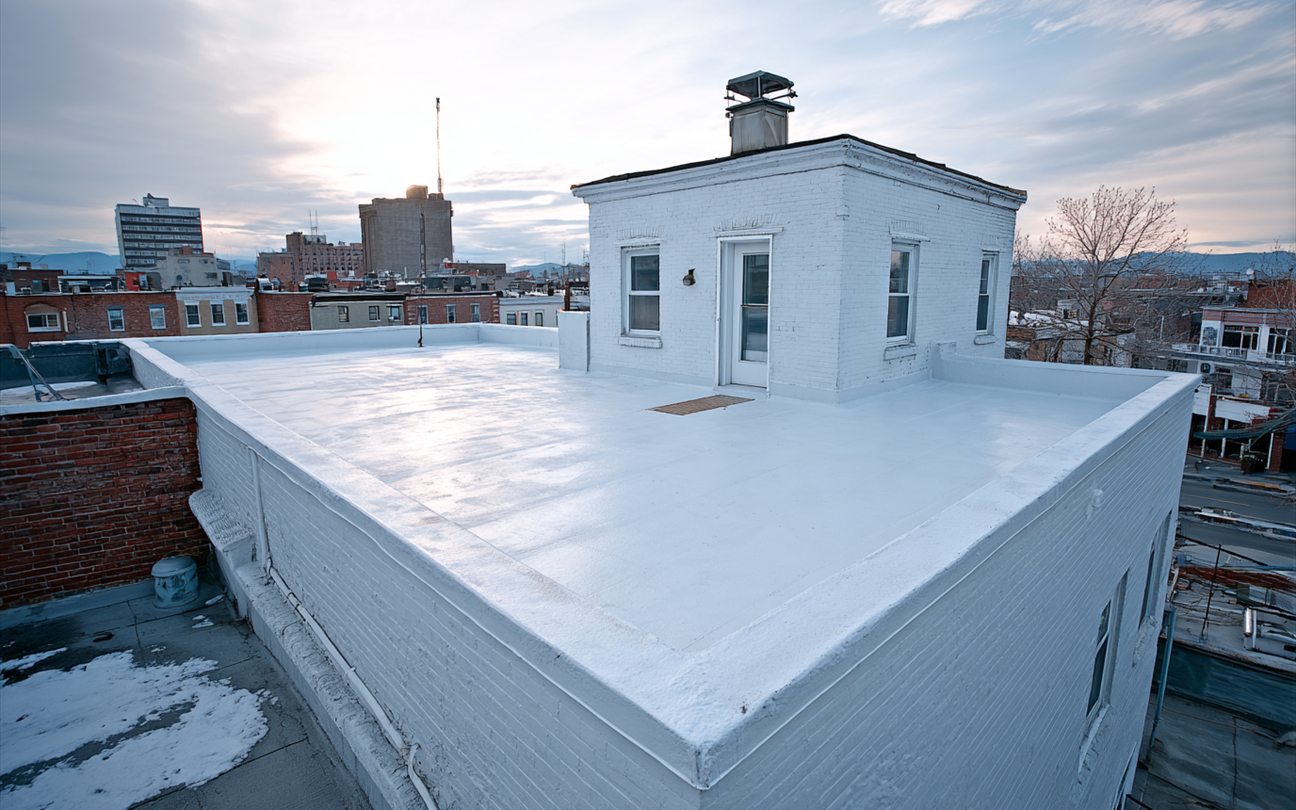
A roof coating is a thick liquid rolled or sprayed over an existing flat roof. It dries into a seamless layer, often white, that covers small cracks and reflects sun. Coatings are sold as a way to put off a full replacement, and sometimes that's exactly what they do. Other times they cover a roof that's already failing underneath, and the leaks come back. The difference is what's under the coating.
When a Coating Makes Sense
- The roof is dry underneath. No soaked insulation, no soft spots.
- The surface is worn, not failed. Fine cracks, chalky or faded membrane, a few small leaks that can be repaired first.
- Drainage is decent. Most coatings don't like sitting under standing water for days. Some are made for it; ask which one.
- You want a few more years. Coatings can add years to a sound roof, especially when the surface is cleaned and repaired properly first.
When It Doesn't
- Wet insulation. A coating seals moisture in. Wet sections have to be cut out and replaced first, and if there are many, a new roof makes more sense.
- Widespread blisters or splits. Bubbles and long cracks mean the layers are separating.
- Leaks in many places. A coating won't fix flashing that's failing at every wall and drain.
- Layers already at the limit. Some buildings already have several roofs on top of each other.
What a Good Coating Job Includes
- A moisture check to find any wet areas.
- Repairs to seams, punctures and flashing, done before the coating.
- Thorough cleaning so the coating sticks.
- A primer where the product calls for one.
- The coating, applied at the thickness the manufacturer specifies, often in more than one coat.
- Attention to drains, walls and edges, where most leaks start.
White Roofs and Summer Heat
A white coating reflects a lot of summer sun. On a top-floor apartment under a dark roof, that can make a noticeable difference in how hot the rooms get. The U.S. Department of Energy explains how reflective roofs work in its consumer guide: Guide to cool roofs. In winter, the effect is smaller, because the sun is lower and days are shorter.
Comparing the Two
| Coating | New flat roof | |
|---|---|---|
| What happens to the old roof | Stays in place, cleaned and repaired | Removed, often down to the boards |
| Fixes wet insulation | No | Yes |
| Fixes poor drainage | Not usually | Yes, with tapered insulation and new outlets |
| Disruption to tenants | Small | Larger |
| How long it lasts | Depends on the product and the roof under it | Usually much longer |
Questions
Can a coating go on any flat roof?
No. The coating has to match the surface underneath. Different products are made for rubber, asphalt-based and metal roofs.
Is a coating the same as a new roof?
No. It's a protective layer over an existing roof. It doesn't replace insulation, boards or flashing.
How do I know if my roof is wet underneath?
A roofer can check with a moisture meter, or by taking a small core sample in suspect areas.
Around Elizabeth
Coatings come up often on the larger flat roofs of Bayway, Elizabethport and Frog Hollow. Full replacements are covered on roof replacement.
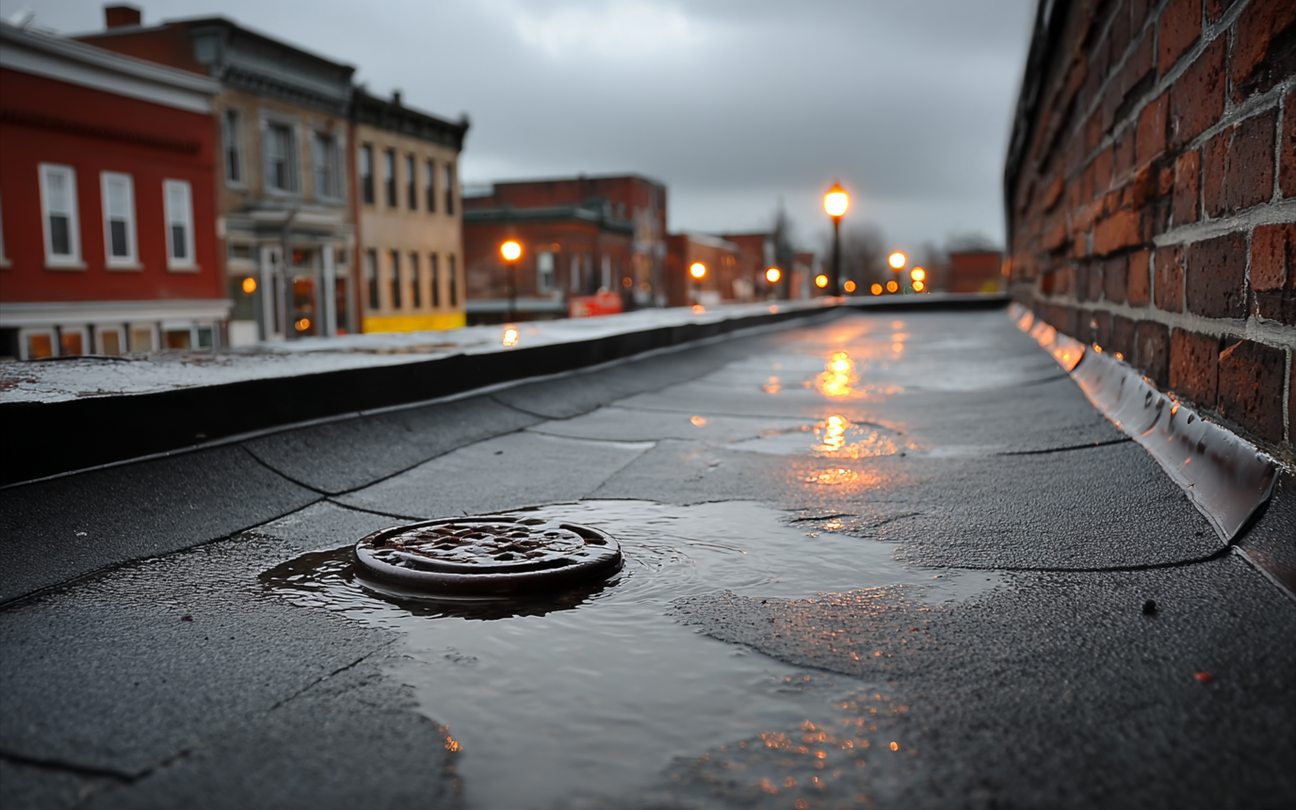
Ponding Water, Roof Drains and Scuppers on Flat Roofs
Why water sits, where it should go, and what fixes it.
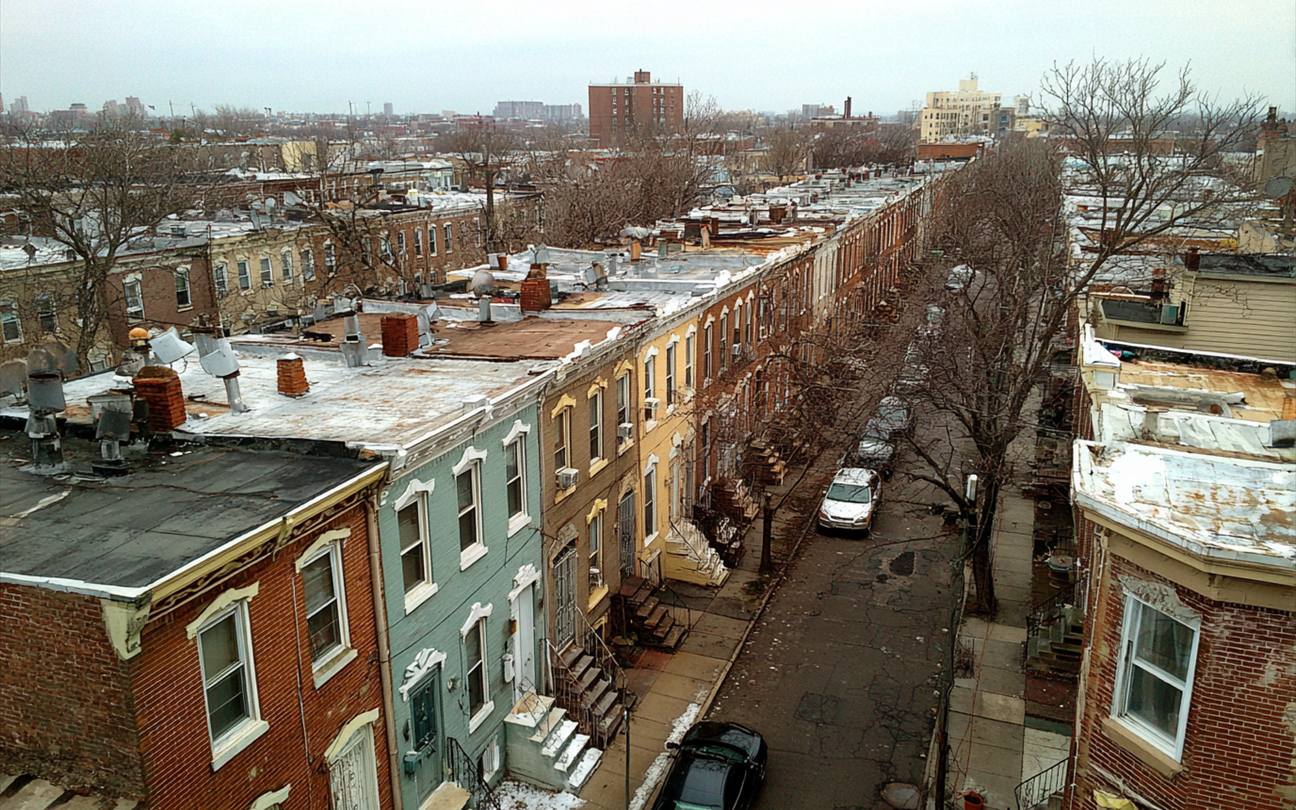
Storefront and Mixed-Use Roofs
Rooftop equipment, curbs and parapets over shops.